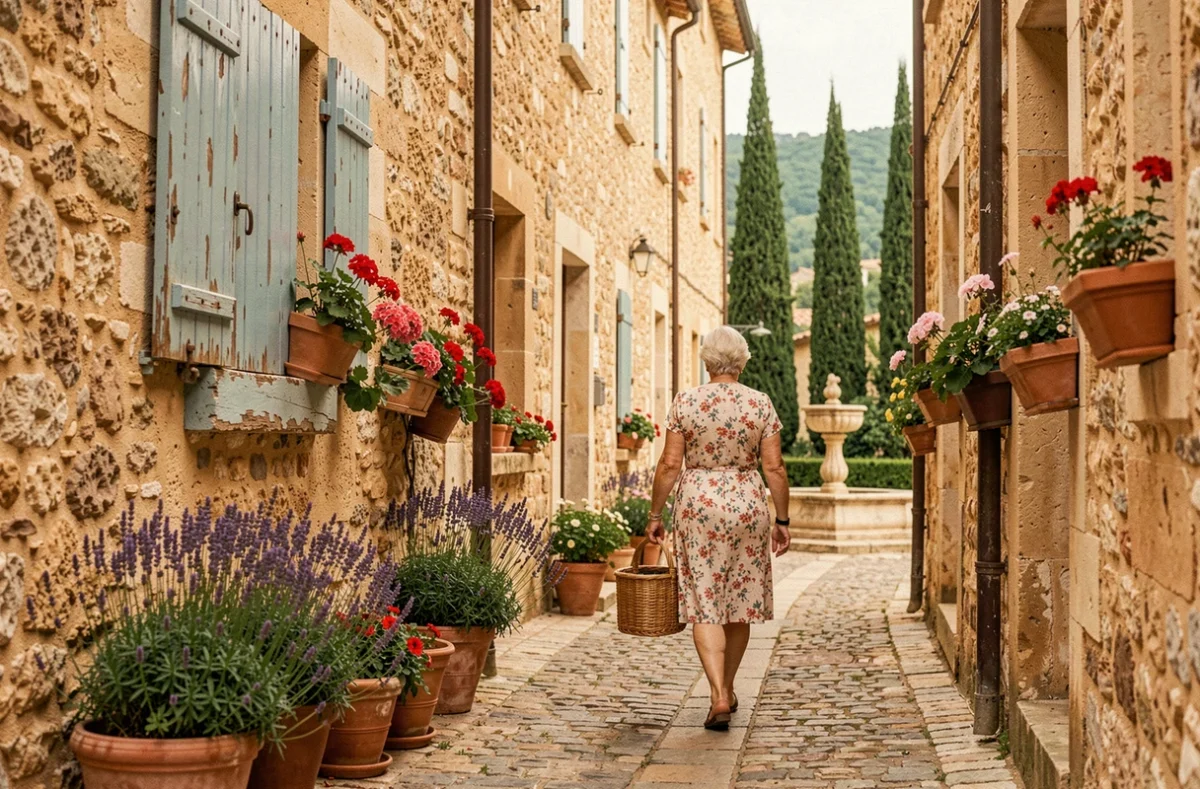
Bargemon is first discovered through sound. The sound of water flowing from a stone fountain, around the corner of a narrow alley lined with ochre facades. This village in the high Var, perched among the olive trees, offers a version of Provence that the main tourist routes often overlook.
Bargemon and the question of water, far beyond the fountains
Have you ever noticed that Provençal villages almost always feature a fountain on their postcards? In Bargemon, the fountains are not just a backdrop. They tell the story of the water supply of a perched village.
The exhibition Secret Rivers, scheduled at the Honoré Camos museum-gallery, addresses this very topic. It combines photography, sound creation, and literature around the aquatic landscapes of the Var. An associated conference discusses the challenges of water in Dracénie, including the preservation of wetlands, runoff, and flood risks. To prepare a visit that coincides with such events, practical information is regularly updated on bargemon.fr.
Built heritage of Bargemon: reading the village’s walls
The medieval alleys of Bargemon are not all alike. Some sections retain a rough stone structure, while others show later modifications, identifiable by their carved lintels. This layering of architectural strata gives the attentive walker a sort of geological cross-section of time.
The ramparts and what they protected
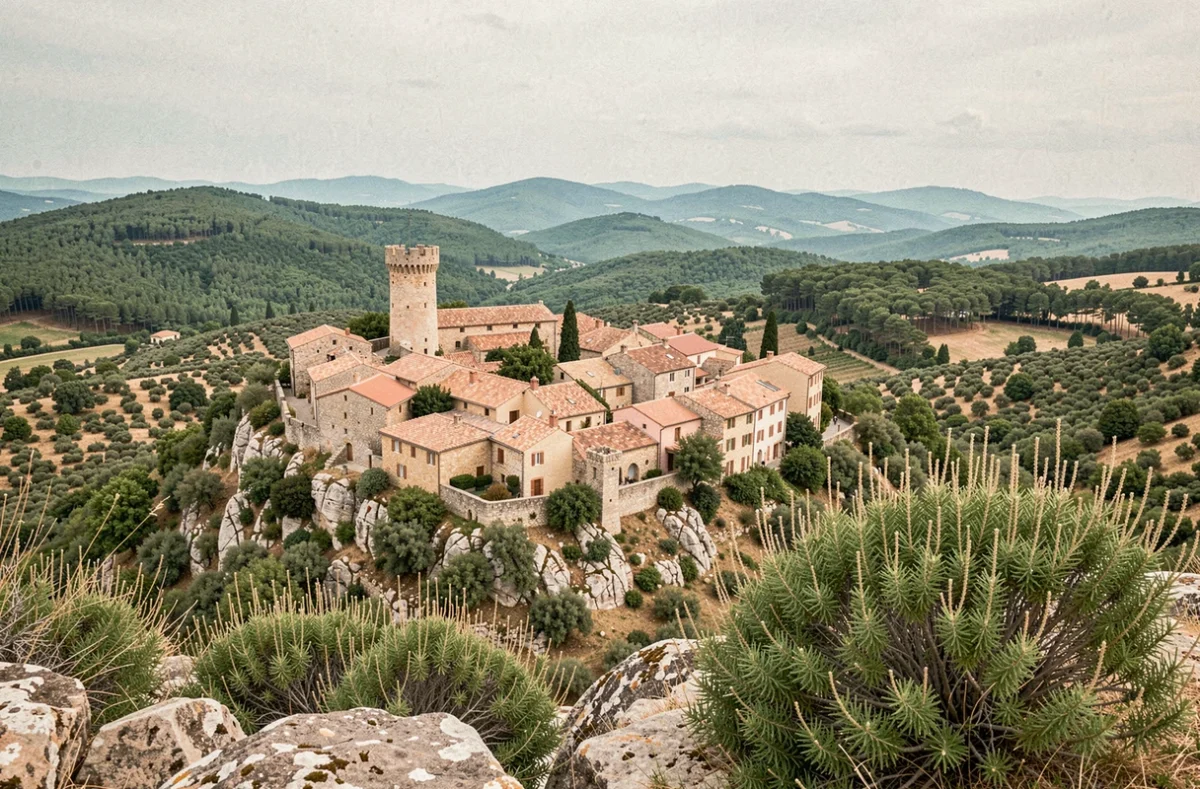
The ramparts of Bargemon date from a time when the village had to defend itself against incursions. Their outline still defines the perimeter of the historic core. In some places, houses have been built directly against the wall, integrating the defensive stone into their domestic structure.
The heritage of Bargemon is read in the intertwining of fortification and habitation. It is not an isolated castle; it is an entire village built as a defensive organism.
Religious buildings and shaded squares
Several chapels and churches punctuate the journey through the village. They also served as social landmarks, with each neighborhood having its place of worship. The small squares surrounding them remain spaces for daily life, not museum-like zones.
- The collegiate church of Saint-Étienne, in the heart of the village, with its bell tower visible from the surrounding hills
- The rural chapels scattered along the access paths, which served as stops for travelers
- The dry stone oratories, small votive structures typical of Provençal religious heritage
Bargemon as a starting point for the Verdon gorges
Many visitors discover Bargemon while looking for accommodation near the Verdon gorges. The village is a reasonable distance from the Verdon without suffering from the summer overcrowding of the main access points.
This geographical position makes it a calm base. In the morning, one can walk in the hills around the village. In the afternoon, one can head to the gorges or the Sainte-Croix lake. In the evening, one can enjoy the tranquility of a Provençal village where the low light transforms the facades.
Hiking trails registered in the PDIPR
The network of paths registered in the Departmental Plan for Walking and Hiking Routes (PDIPR) crosses the municipal territory. These marked trails allow one to connect Bargemon to neighboring villages on foot, through landscapes of scrubland, evergreen oaks, and olive groves.
Hiking remains the most direct way to understand the link between Bargemon and its terroir. The paths pass through cultivated terraces, springs, and dry stone walls that have structured the landscape for centuries.
Cultural life in Bargemon: a village that programs, not just exhibits
The Honoré Camos museum-gallery does not function as a simple permanent exhibition space. Its programming changes and is rooted in local issues. The exhibition Secret Rivers is a recent example, but it is part of a broader approach.
Bargemon also hosts occasional events that transform the village into an artistic route. The National Artists’ Day, scheduled for October 3, 2026, invites the public to meet creators directly in the streets and workshops of the village.
Why choose to program in the village rather than in an enclosed space? Because the very architecture of Bargemon, its alleys, covered passages, and squares, provides a setting that interacts with the works. A painting hung in a medieval alley is not viewed the same way as in a white gallery.
- Check the cultural calendar before setting a visit date, as the offerings are not permanent
- The activities associated with the exhibitions (conferences, readings) provide insights that a free visit does not
- Some events are free, others require registration, and the modalities vary according to the programming
Nature and altitude: what the high Var changes in the Provençal experience
Bargemon is not a village on the Var coast. Its altitude alters the climate, vegetation, and atmosphere. Summers are less stifling than by the sea. Evenings cool down significantly.
This difference is also felt in the vegetation. Olive trees coexist with species typical of mid-mountain areas. The landscape around Bargemon blends Provence and pre-Alps, a geographical transition that few Var villages offer so distinctly.
Nature lovers find a varied terrain: dry hills exposed to the south, humid valleys oriented to the north, and forests of pubescent oaks on the intermediate slopes. This mosaic of environments explains the botanical richness of the area.
The authentic charm of Bargemon lies in this combination: a dense built heritage, a cultural life that goes beyond folklore, and a geographical anchoring between Provence and the mountains that changes the light, scents, and rhythm of the days.