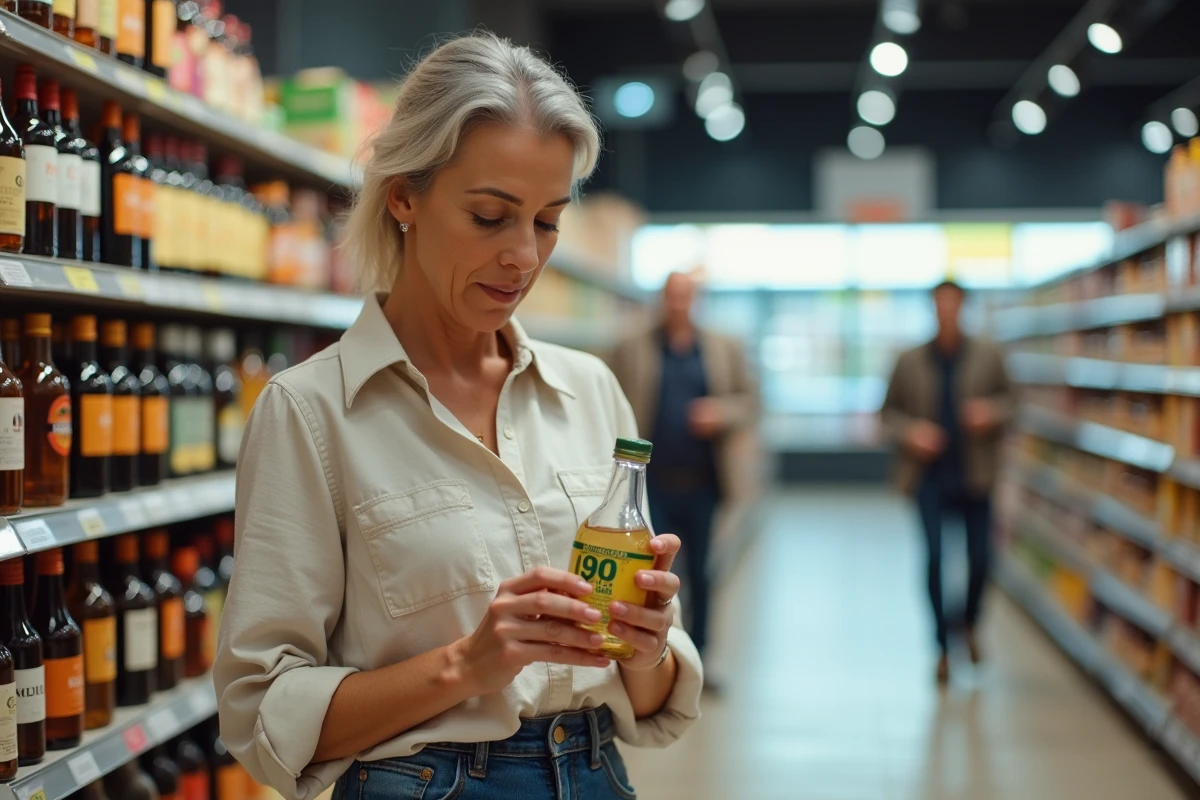
When preparing a cherry liqueur or a walnut wine in the summer, one naturally looks for a strong alcohol for maceration. The common reflex is to head to the nearest Leclerc and grab the bottle of 90° alcohol from the shelf. The product does exist, but there is a catch: the one most often found is not meant to end up in a jar of fruit.
Modified 90° Alcohol in the Drugstore Aisle: A Product Forbidden in Cooking
The bottle that most Leclerc stores list under the name “modified 90° vol alcohol” (Primoplast brand, among others) is a denatured product classified as non-food. It contains additives like camphor, methyl ethyl ketone, or bitrex, added specifically to make it undrinkable.
These denaturing agents do not evaporate during maceration. They cannot be “neutralized” by leaving the jar open or by filtering the result. Using this alcohol to prepare fruits or liqueurs poses risks of poisoning, even in small doses over several weeks of consumption.
The confusion arises from the aisle: in some stores, this bottle is found alongside food products or kitchen accessories. The label alone can clarify. If the mention “modified alcohol” or “external use” appears, the product is strictly prohibited for any consumable preparation. Those looking to obtain 90 alcohol for fruits at Leclerc must check this mention before any purchase.
French Regulations on Non-Denatured Ethyl Alcohol at 90°
Since the 2021 reform on denatured ethyl alcohol, prefectures and the DGCCRF have tightened the framework. The sale of non-denatured ethyl alcohol above 60° to the general public is heavily regulated: limited volumes, distribution almost exclusively reserved for pharmacies or professional circuits.
Supermarkets like Leclerc no longer list, in most regions, any true food-grade alcohol at 90°. The reason is twofold: the excise duties on pure non-denatured alcohol are high, and the distributor’s liability in case of misuse is engaged.
ANSES and the DGCCRF remind us that the use of modified alcohol for food preparations is explicitly non-compliant with their recommendations. This is not a legal gray area: it is a clear prohibition, regularly reiterated in customs service notes after 2022.
What the Label Says and What to Read
Before checking out, verify three elements on the bottle:
- The mention “fruit alcohol” or “drinking alcohol” confirms a food product. If it is absent, put the bottle back.
- The ingredient list should only contain ethyl alcohol and water. Any additive (camphor, bitrex, methyl ethyl ketone) indicates a denatured alcohol.
- The aisle of origin matters: a product found in the drugstore or hygiene aisle has no reason to be food-grade. The beverage or fine grocery aisle is the right place.
Concrete Alternatives When the Leclerc Aisle is Empty
In practice, finding a true food-grade alcohol at 90° in a supermarket is a matter of luck. Feedback on this varies by region and time of year. Some Leclerc stores carry it in season (summer, fall), while others have never had it in stock.
If the aisle is empty, several options work:
- Pharmacies sell non-denatured ethyl alcohol in small volumes. The price per liter is higher, but food compliance is guaranteed.
- Artisanal distilleries and agricultural cooperatives offer neutral alcohol for fruits, often in canisters. This is the most direct route for maceration volumes.
- Specialized websites for distillation and liquor-making equipment deliver food-grade alcohol at 90° or 96°, with the required traceability documents.
- White brandy at 40° (available in the beverage aisle at Leclerc and elsewhere) remains a common substitute for fruit maceration, even though the result differs in extraction and preservation.
40° Brandy or 90° Alcohol: What It Changes in the Jar
With 90° alcohol, the extraction of aromas and pigments is quick and intense. You get a concentrated liqueur that is then diluted with a sugar syrup. The preservation is long, and the result is stable.
With 40° brandy, the maceration takes longer. The finished product is less concentrated, sweeter, but also less stable over time if the sugar content is low. For a walnut wine or a cassis liqueur consumed within the year, it’s an acceptable compromise.
The choice depends on the recipe and the time you are willing to wait. For cherries in brandy served as is, 40° is more than sufficient. For a filtered liqueur bottled for several years, food-grade 90° remains preferable.
Real Health Risks of Modified Alcohol Used in Cooking
There are still forums where users claim to have macerated fruits in modified alcohol “without any problem.” This is not a health argument. Denaturing agents like bitrex are added in small but sufficient quantities to cause digestive disturbances with repeated ingestion.
Camphor, on the other hand, is neurotoxic at relatively low doses. A long maceration does not degrade these molecules: they remain in the finished product. French poison control centers receive reports each year related to accidental or intentional ingestion of modified alcohol.
The legal risk also exists. Serving guests a preparation made with a non-food product engages the responsibility of the person who prepared it. In case of poisoning, the mention “modified alcohol, external use” on the bottle is enough to establish fault.
The only reliable way to prepare fruits in alcohol at home remains to use non-denatured ethyl alcohol labeled “for fruits” or “drinking”, purchased at a pharmacy, from a liquorist, or in the rare supermarkets that still list it in the food aisle.