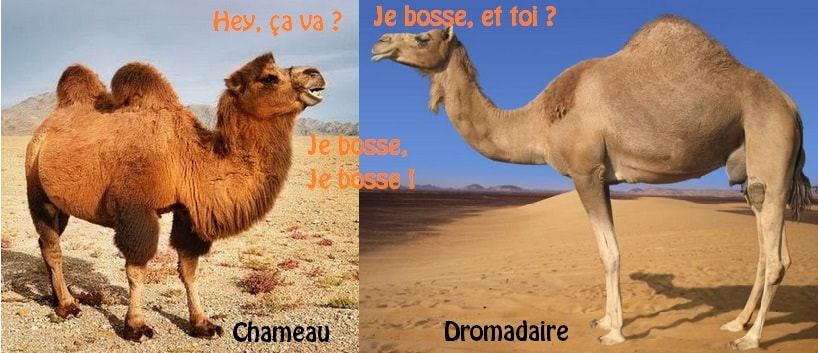
Hard to be here! How many humps does the camel have? How many humps does the cameldifference have? What is the difference between camel and camel? What are the common points?
For all these questions, we have the answers! And on top of that, there are a few little mnemonic tricks to never get it wrong again!
We will first introduce the animals and then explain their differences.
Summary of the article
- Differences between camel and camel
- Where do camels and camels live? Where do they come from?
- How many humps does the camel have? How many humps does the camel have? One or two?
- Mnemonic means remembering their number of humps
- Joke about camels and camels
- How is the fur of camels and camels different?
- Which is bigger, a camel or a camel?
- Which is more aggressive?
- One last piece of info about the humps
What is in a hump? Is there water in the hump of camels and camels?
Differences between camel and camel
Camels and camels are very well-known animals. Even though they do not live everywhere in the world, there is more than one movie in the desert that features these animals, transporting people or packages. Although both animals are popular, one of the most common questions when learning about them is: who has two humps, camel or camel?
In addition to the difference in the number of humps, these two animals have special characteristics.
Where do camels and camels live? Where do they come from?
A fundamental difference between a camel and a camel is that they come from different places. More specifically, the Bactrian camels or “two-humped camels” come from Central Asia and, on the other hand, the camels come from the Arabian Peninsula.
Both camelids continue to live in their region of origin and in the countries where they have been introduced. For example, in Australia, there are camels! They were introduced in the 19th century! Check out the short video from Natgeo WILD France about this:
The origins of an animal are reflected in its physical characteristics due to its adaptation to the environment/climate and thus its evolution. For example:
- Camels are better prepared to withstand high temperatures than camels. They can easily withstand temperatures above 50°C.
- Camels have evolved to withstand long periods of cold winter. Think of the desert of World map of current habitats of the camel: Africa Gobi
 , which can reach -40 degrees C°! World map representing the current habitats of the Bactrian camel (two-humped camel).
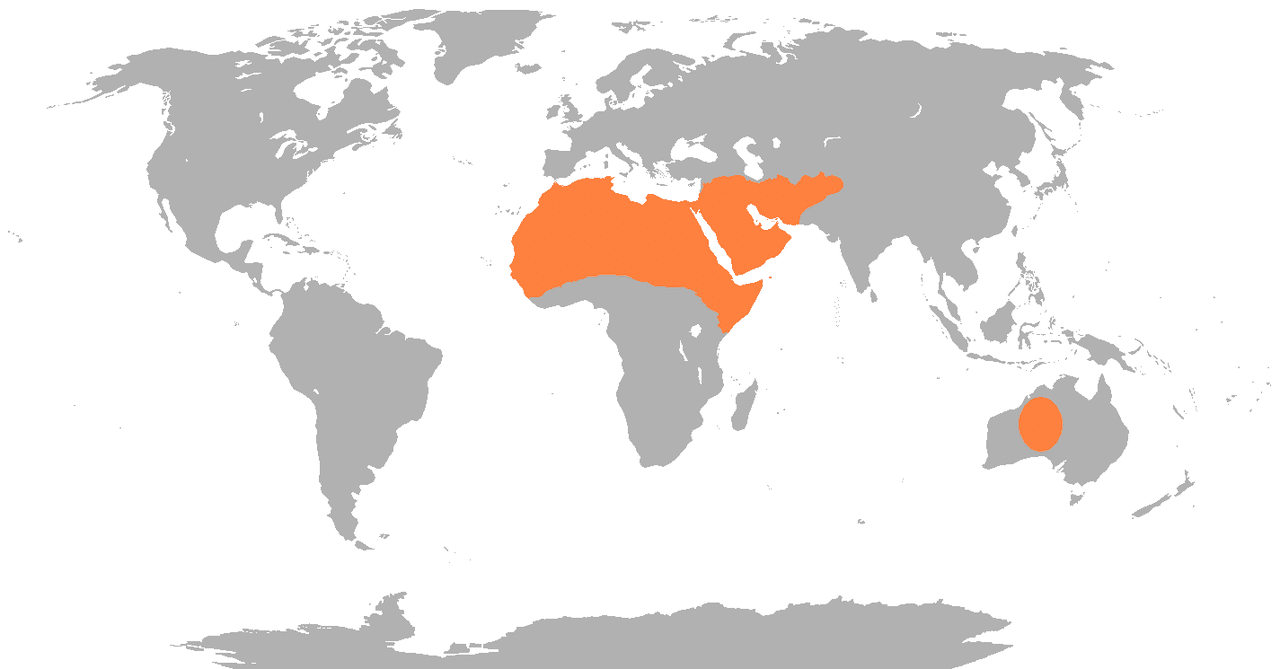
 , which can reach -40 degrees C°! World map representing the current habitats of the Bactrian camel (two-humped camel).
How many humps does the camel have? How many humps does the camel have? One or two?
In addition to being a common issue in games and a general knowledge question, the number of humps that a camel and a camel have is the main and most visible difference between these two camelids.
Camels have one hump while camels have two.
What is in a hump? Is there water in the hump of camels and camels?
In both cases, the mass of a camelid is a kind of deposit of fat tissuefalse. A popular belief that the humps are filled with water is completely false!
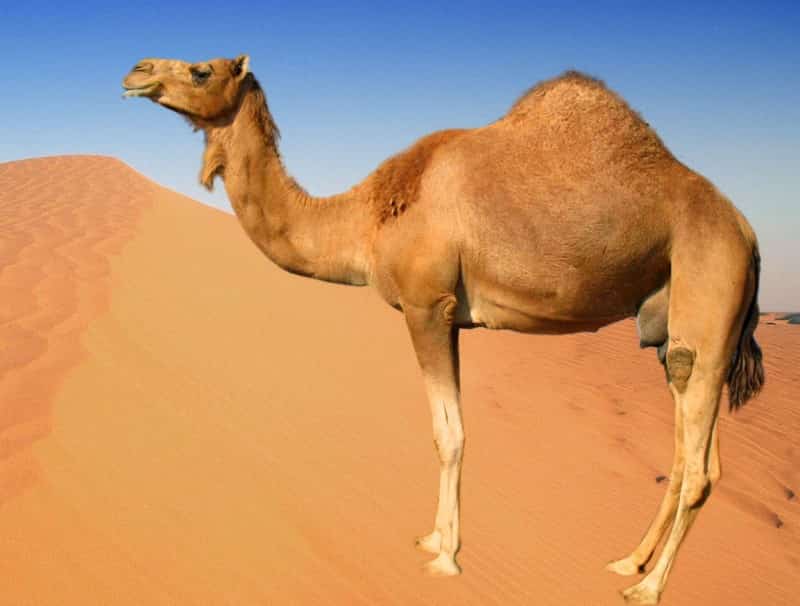 A camel. An animal with a characteristic hump that can reach a height of 2 meters! Its short hair makes it resistant to very hot temperatures. Native to the Arabian Peninsula, it can also be found in Africa (Sahara, Sahel,…) and Australia
- Camels use it as an energy and water reservethirsty dromedary can drink about 135 liters of water in just 15 minutes before a long journey across the desert. Up to 36 kilos of fat can be stored in its hump. Another surprising fact is its absorption.
A Bactrian camel also commonly referred to as a two-humped camel. It is characterized by its two humps, thick fur, and long hair that protects it from the cold. Agile on mountainous terrain, easy on snow, the camel primarily lives in Central Asia but can be found as far as Turkey.
- The camel, in addition to being an energy reserve, also uses the fat reserves in its humps against the cold.
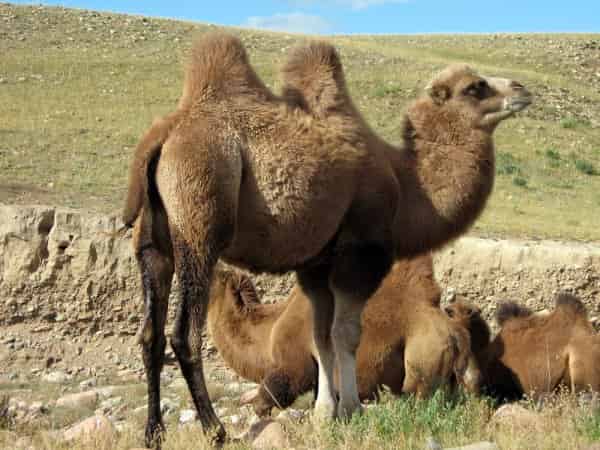 A Bactrian camel also commonly referred to as a two-humped camel. It is characterized by its two humps, thick fur, and long hair that protects it from the cold. Agile on mountainous terrain, easy on snow, the camel primarily lives in Central Asia but can be found as far as Turkey.
Mnemonic means remembering their number of humps
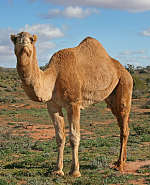
The word camel has two syllables, so two humps! Cha—MeuA camel with its single hump, two humps!
We also remember that in droma daire, there are two “d“, not two humps! (baby-letsite)
Igire also presented his trick: just look at the plural of these two animals. For camels, we have an x at the end, this letter x requires two strokes to write (like two humps), while for dromedaries, we have an s, which requires one single stroke to be written (like one hump).
Joke about camels and camels
There is also a little joke: It’s a camel meeting a camel:
Camel: How’s it going?
Camel: Oh, I’m working, and you?
Camel: I’m working… I’m working.
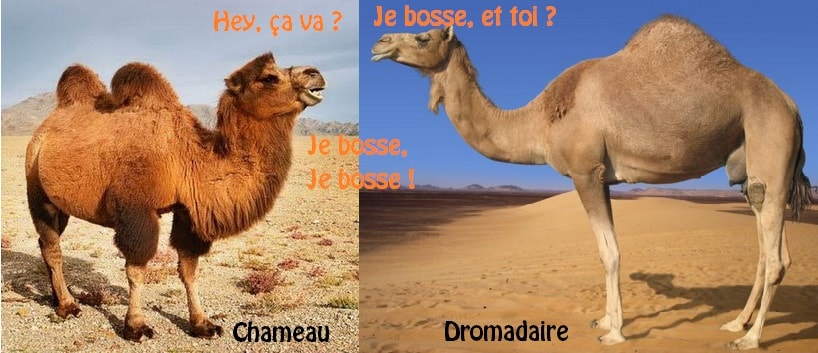
The camel with its two humps on the left and the dromedary with one hump on the right. How is the fur of camels and camels different?
Although both animals have the same dusty brown color, the type and texture of their fur are different:
A camel has longer hair, which, you guessed it, protects it from the cold.
On the other hand, the camel has short and uniform hair all over its body. This type of covering helps it better withstand heat.
Which is bigger, a camel or a camel?
Dromedaries — also called “Arabian camels” — are bigger, which is confusing. This is because their legs are longer, which keeps them further from the heat emitted by the ground. While a dromedary can reach up to 2 meters tall, camels usually do not exceed one and a half meters.
This is particularly interesting because this does not apply to weight. Camels are generally heavier than camels.
The camel is less resilient, adapted for climbing mountainous and snowy terrain both on long journeys and over several days without eating or drinking. Instead, it is best.
Which is more aggressive?
Aggressive reactions from dromedaries are quite frequent. They only do this when they are disturbed. In contrast, camels are much more quiet and it is strange to see them behave aggressively. However, they are less suited for transporting people due to their physical build.
One last piece of info about the humps
Camels and camels can dehydrate up to 40%. This is thanks to their humps, which, as mentioned above, are filled with fat, that is, nutrients and energy.
When a camelid starts to dehydrate, the humpsdecrease in volume. They can even become flexible and move to the side of the camel. As the animal rehydrates, the hump returns to its upright position.
Now that you are not sticky about the difference between camel and camel, you can also remember the differences between South American camelids!
Save
Save
Save
Save
Tag: differentiating a camel and a dromedary