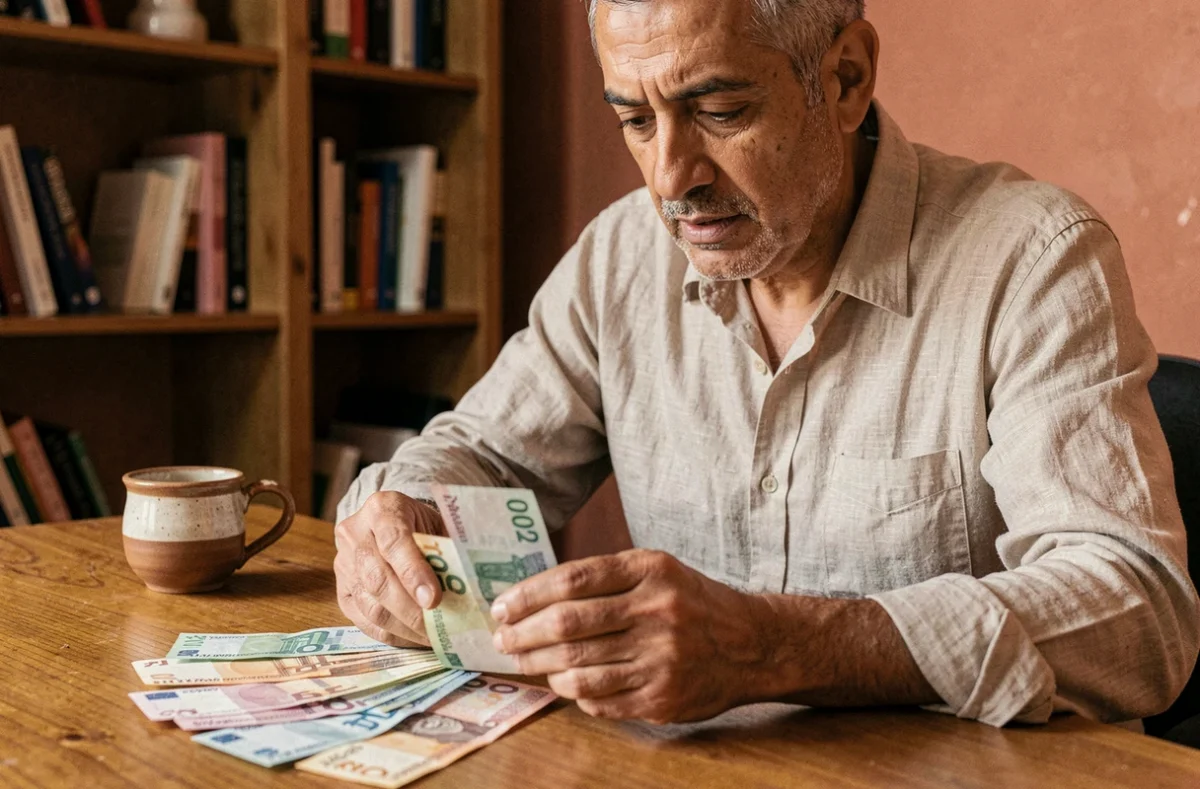
Converting 1,000 Moroccan dirhams into euros gets you around 90 euros at a currency exchange office, but the difference between the best and worst conversion options can amount to several euros on this sum. The difference comes down to three factors that most guides gloss over: the exchange rate applied (buy or sell), fixed transaction fees, and the timing of the transaction.
Buy rate, sell rate and spread: how your euro amount is determined
The Moroccan dirham operates under an exchange-rate regime overseen by Bank Al-Maghrib. The reference rate published each day is not the rate you will get at the counter. Each provider applies a spread between its buy rate and sell rate, and this spread is its profit margin.
When you sell dirhams to receive euros, the provider’s buy rate applies. This rate is always lower than the reference rate. The narrower the spread, the more euros you get.
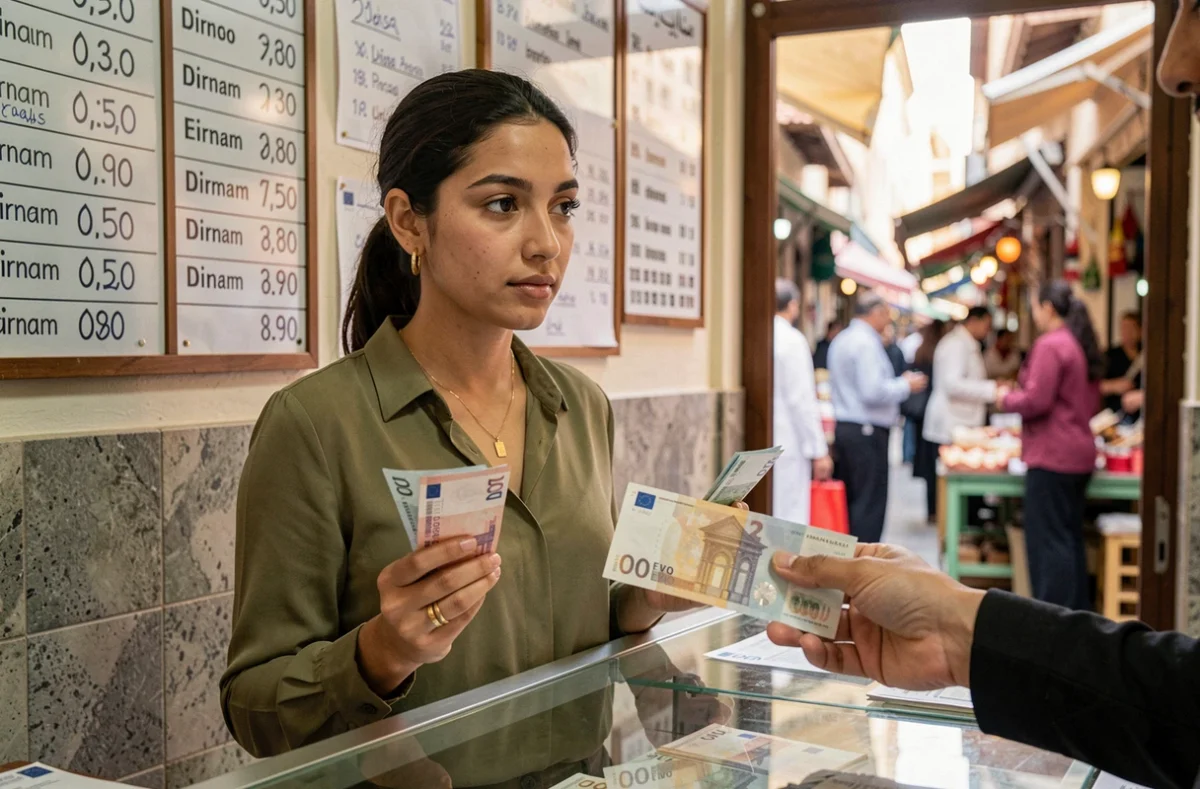
An authorized currency exchange office in Morocco offers a rate close to 1 euro for 11.02 DH, while a Moroccan bank may offer as little as 1 euro for 11.32 DH. On 1,000 DH, this creates a difference of around 2 euros: the difference between receiving about 90 euros or about 88 euros. To convert 1000 dirhams marocains en euros on the best terms, we recommend always checking the displayed spread rather than the headline rate.
Fixed fees and hidden thresholds on MAD-to-EUR transactions
The exchange rate only tells part of the story. Some providers add fixed fees per transaction (service charges, processing fees), which have a proportionally greater impact on smaller amounts such as 1,000 DH.
Moroccan banks often charge a fixed fee for cash currency exchanges. On an amount of 1,000 DH, this fee can reduce your return by another one or two euros compared with the displayed rate. Authorized currency exchange offices generally build their margin into the spread, without a separate commission, making comparisons easier.
What your receipt should include
Under recent regulatory changes governing currency exchange in Morocco, an authorized exchange office must display its authorization and up-to-date rates. Always ask for a receipt detailing the rate applied, amount converted and any fees. Without this document, you have no recourse if the amount you receive differs from the rate quoted.
Bank card, ATM withdrawal or cash: which option should you use to convert your dirhams?
The method of exchange matters just as much as the rate. Three options are available, each with its own layers of fees.
- Exchanging cash at an authorized office offers the most transparent spread and the best return on 1,000 DH, provided you compare several providers in the same city (differences between exchange offices in Tangier or Marrakech can be significant).
- Withdrawing euros from a Moroccan ATM using a French card means paying fees charged by the issuing bank (foreign withdrawal fees, often a percentage of the amount plus a flat fee) as well as a conversion rate set by the Visa or Mastercard network. The network rate is often reasonable, but bank fees cancel out this advantage on smaller amounts.
- Paying with an international bank card in Morocco and then converting the remaining balance back involves two currency exchanges (EUR to MAD when you pay, then MAD to EUR when you convert it back). Double conversion is the most expensive option for travelers who want to get euros back.
Online comparison tools: a guide, not a guarantee
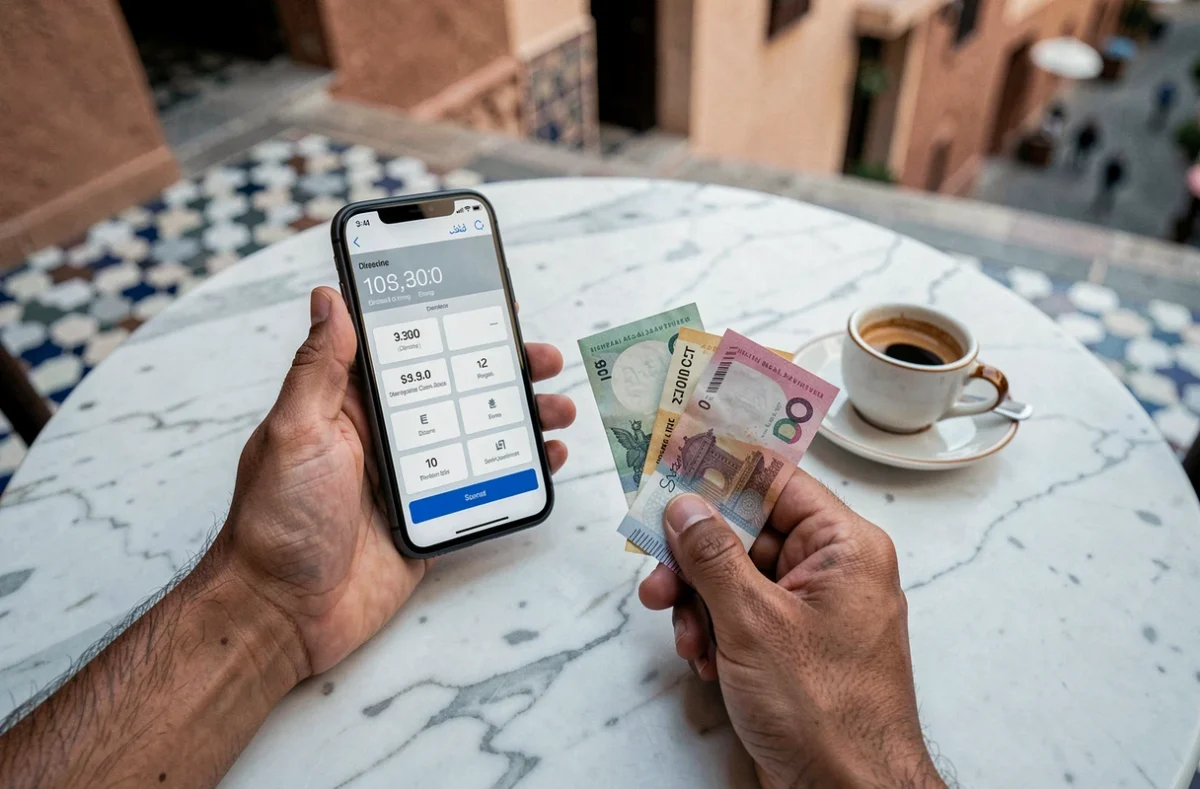
Platforms displaying a “live” MAD/EUR rate use the interbank rate, which is not available to individuals. The amount you actually receive depends on the provider’s sell rate and fees. An online rate is a useful benchmark for spotting unreasonable offers, but only the final euro amount shown on the receipt is binding.
Timing your conversion: when to sell your dirhams to get more euros
Although the dirham is regulated, it fluctuates within a band around the reference rate. These daily fluctuations are modest, but over several weeks they can amount to a few dozen euro cents on 1,000 DH.
The least favorable time to convert dirhams into euros generally coincides with peak tourist demand. During the high season, currency exchange offices in tourist areas widen their spreads. Exchanging your money before you travel or at a bank branch in the city center will get you a better deal than a hotel or airport counter.
Exchanging dirhams back in France
Since the Moroccan dirham is not freely convertible internationally, you can exchange your banknotes back into euros at some specialist currency exchange offices once you return to France, but at a significantly worse rate. It is better to adjust the amount you exchange before your trip to avoid being left with dirhams.
The key to getting the best return on 1,000 DH is to compare the final amount after all fees between two or three local providers. A spread difference of one-tenth of a percentage point on the MAD/EUR rate means a difference of less than one euro, while a fixed fee or double conversion can cost three to five times as much.